Thankyou to Cox and Kings

Well I didn’t win the competition organised by Cox & Kings, but they have done me a great favour by inviting me to take part. I hadn’t painted for over 6 months and this was just the spur I needed to get me started again. So thank you Katie Parsons of Cox and Kings for considering me as one of the competitors.

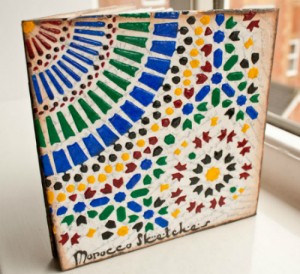
KimDellowMoroccoBook

The winner was Kim Dellow whose entry was a skillfully crafted travel journal. I would love to own such a beautiful sketchbook and Kim’s success in the competition is well deserved. Congratulations Kim and well done to Concetta Perot, Alan Reed and Vandy Massey for their lovely contributions.

Morocco art competition – Final stage

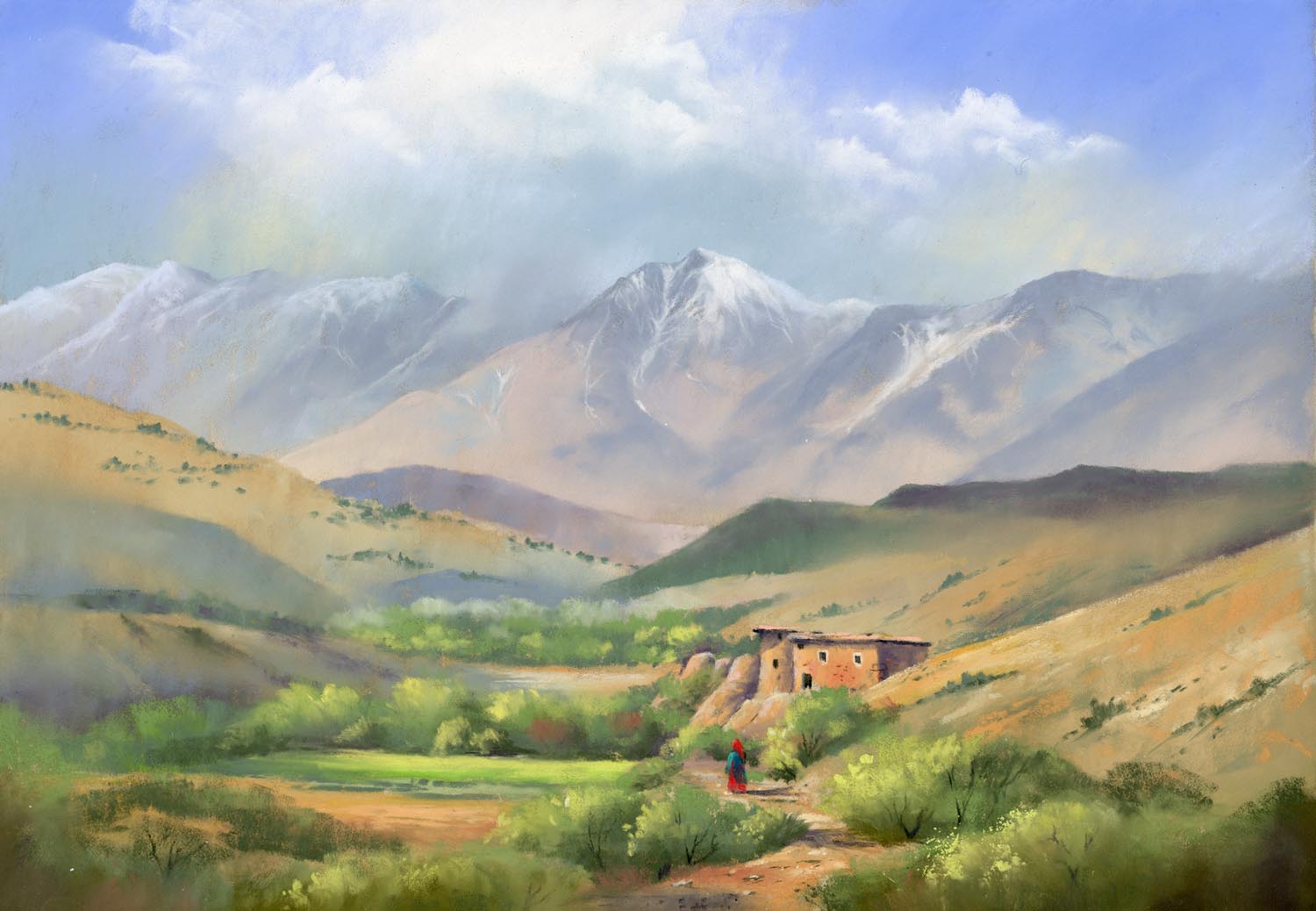
My entry for the Cox & Kings competition is finished.The final stage of any painting is a dangerous time. The temptation to put in every detail is great but it must be resisted. In the photograph which I posted on 28th October, (you can see this if you scroll back through my blog) there were a lot of trees and bushes so these have to be simplified. Also the hillsides were dotted with scrubby bushes but to include all of those would be spotty and distracting.

morocco stage5asm

There was no obvious pathway leading the eye into the painting so I created one that led towards my focal point, the building. I had moved the building closer to the wadi so that it fell in a more pleasing location, directly below the main peak of the mountain and within the Golden Section. The strongest tonal contrast is on the building and I have added a figure, a Berber woman in bright clothing which I had found in my 1993 Morocco sketchbook.

I have thoroughly enjoyed this exercise and I want to thank Katie Parsons of Cox and Kings for inviting me to take part. It was the incentive I needed to get painting again after a long absence.  I wish my fellow competitors good luck.

Stage 4 of my competition entry

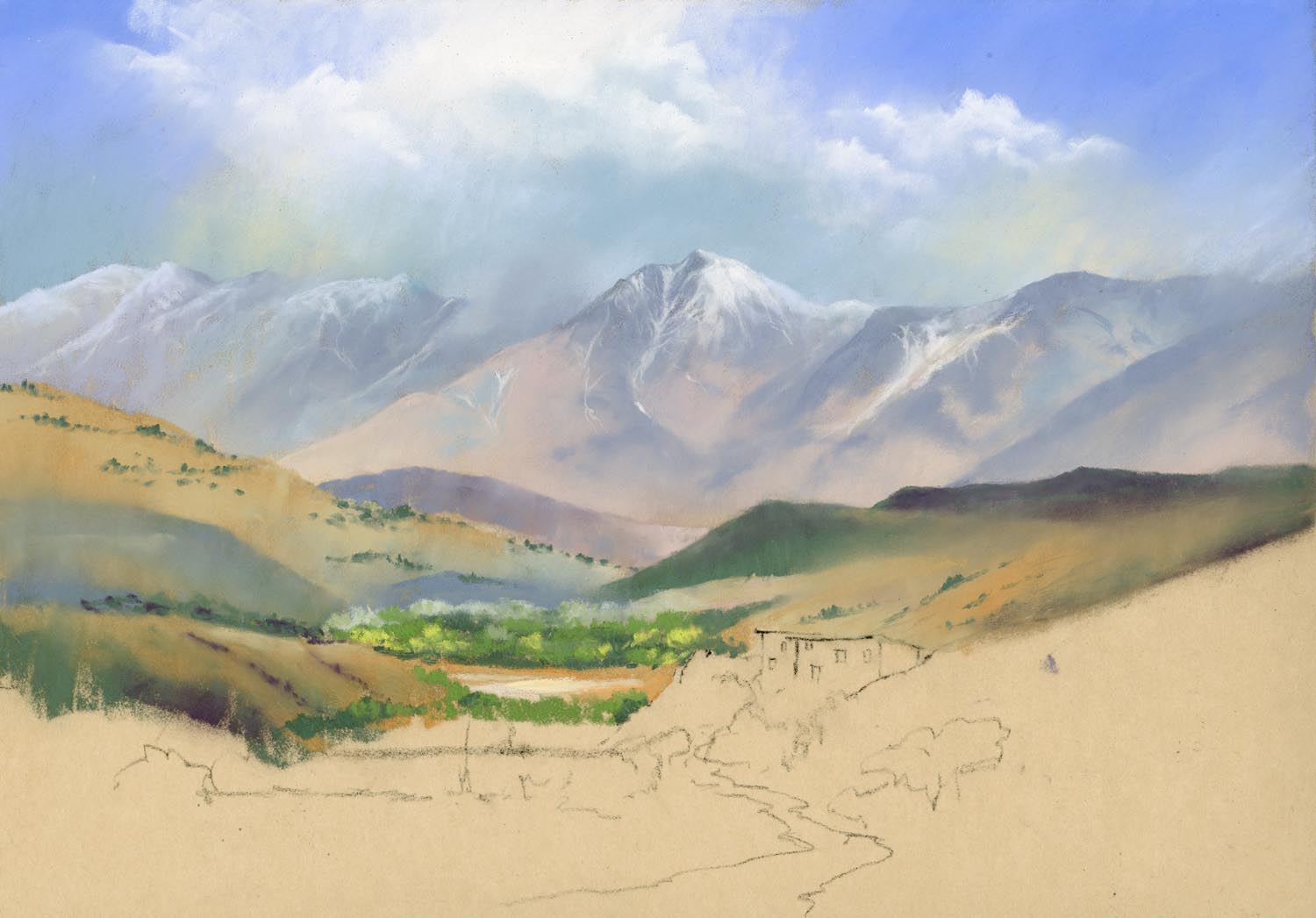
I have made further progress on my painting for the Cox & Kings Morocco competition: The middle distance in a landscape painting is often a tricky area to tackle. It’s important to keep in mind the relative size of features compared to the foreground such as trees and bushes;   the colour temperature must be carefully controlled;  and we must resist the temptation to render too much detail to features that are distant.

morocco stage4

Stage 4 – middle distance

In the photograph there were very strong, sharply defined cloud shadows on the hills on the right and initially I painted these in as they were in the photograph but I quickly realised that they were drawing the eye too much and would compete with my focal point so I softened them considerably. The hills on the left were lighter in tone with less tonal contrast so there was no need to soften them too much.

The next stage will be the focal point, the building, and the foreground. See you in a few days.


Stage 2 & 3 of my competition entry

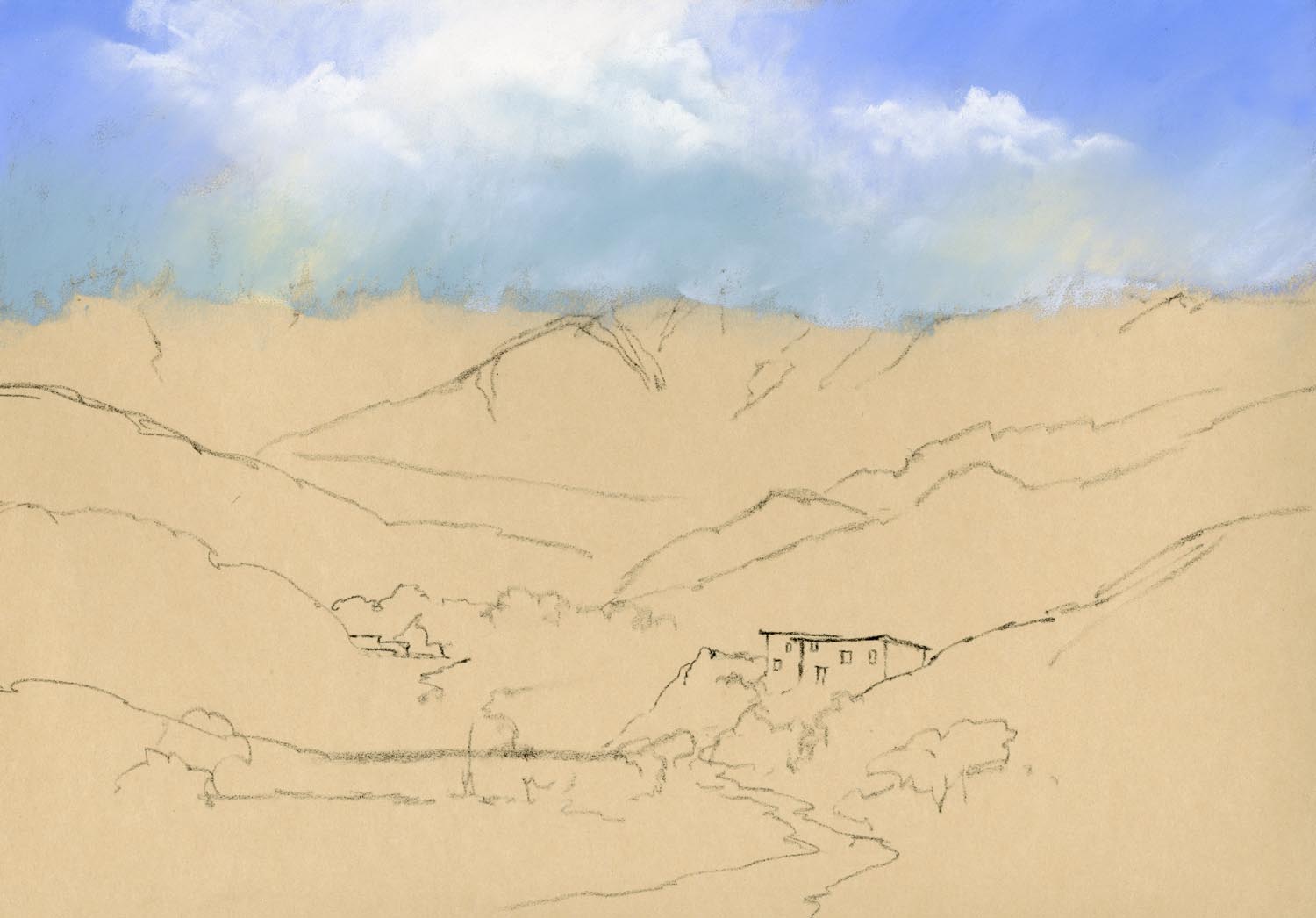
Yesterday I made more progress on my painting for the Cox & Kings Morocco competition: Stage 2 – Sky: When painting landscapes, I generally work from the top of a painting downwards. This serves two purposes. Firstly it helps prevent the heel of your hand smudging the work where it rests on the support and secondly it helps create a sense of recession. If you think of the landscape in terms of distance, the objects farthest away are usually lighter in tone, cooler in colour and less distinct. Translating this into the painting process means that you use paler, cooler colours in the distance and less detail. By working down the support you can remember that meme in your choice of colour and tone.
morocco stage2

Stage 2 – Sky

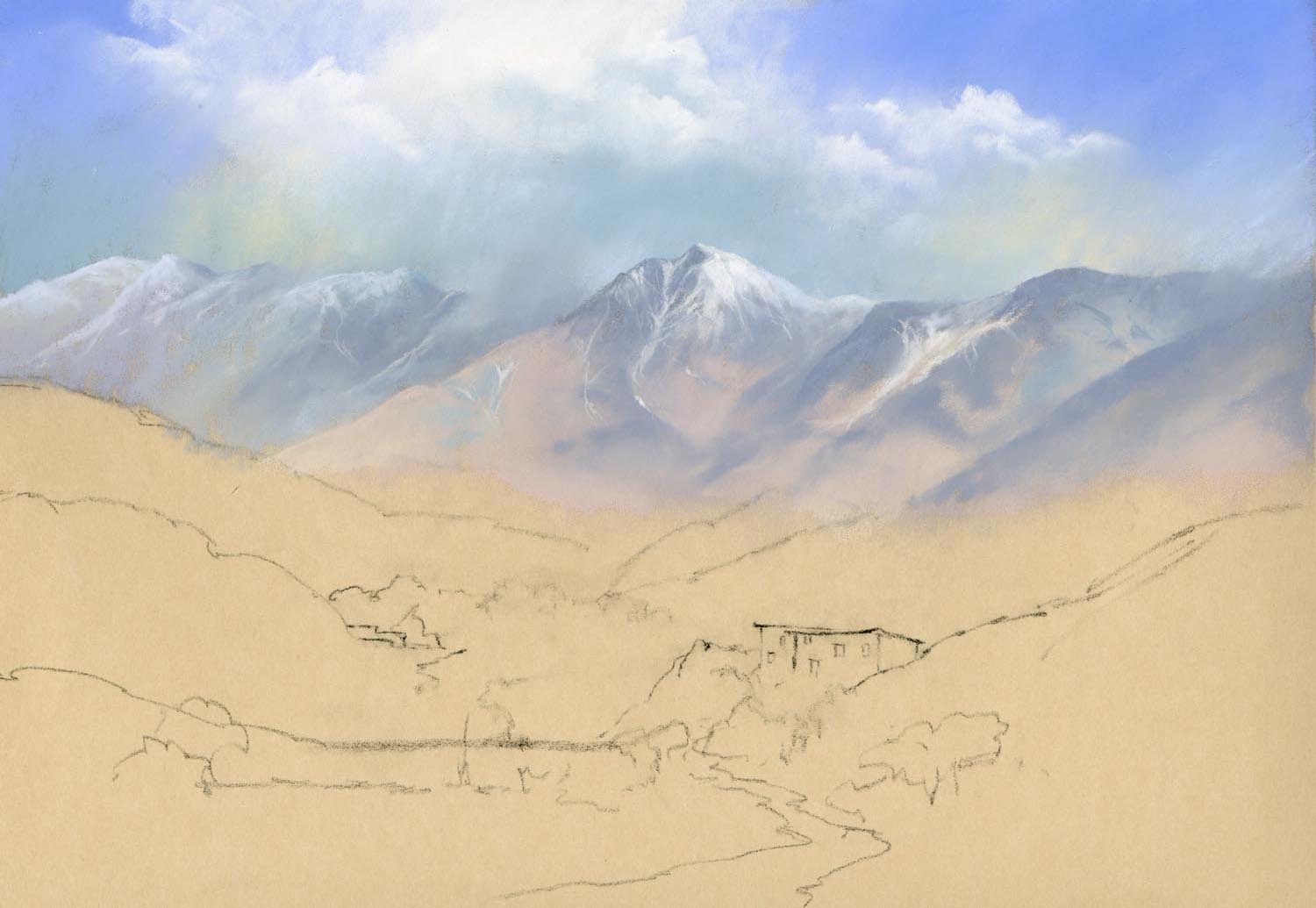
Stage 3 – The mountains: The sky was painted down over the drawn lines that defined the mountain tops. This is to ensure that there are no gaps between the sky and mountains and also to give the impression that the sky is, in effect, behind the mountains. Sticking to cooler colours and pale tones, the mountains are painted with sharp edges in places and softer edges in others so that there is not a hard line all the way across the painting. Soft edged cloud shadows helps define the ridges.
morocco stage3csm (1)

Stage 3 – the mountains

The next step will be coming soon.

The Secret of Speckles

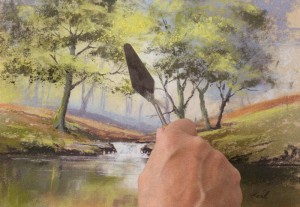
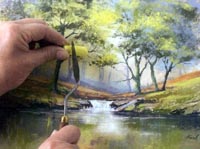
I’ve been asked many times how I get the fine speckles of colour in my paintings so I am going to let you into the secret. I lay the painting flat on a table and using the edge of a palette knife I scrape flakes of pastel on the surface where I want to create the effect of small leaves, seed heads in a field or sea spray on rocks etc. I than press the flakes into the painting with the flat of the palette knife. If there are some stray flakes which you do not want, you simply don’t press them in and they will either fall off when you place the painting in a vertical position or you can blow them away.

Scraping

Step 2. Press the flakes into the surface of the painting with the flat of the palette knife where you want them to stick. Blow away any unwanted flecks.

Pressing in Speckles

Step 1. Lay the painting horizontal on a table and using the edge of a palette knife, scrape flakes of pastel from a pastel stick on to the surface of the painting where you want to create fine specks of colour.

__________________________
This technique is most effective if you use contrasting tones and colour.

It is almost impossible to achieve these fine marks with a dotting technique and the random effect is particularly pleasing.  However, I will issue one word of warning. This technique is addictive and it is easy to get carried away using it all over the place and then the effect is spoiled.This technique is described in my book Painting with Pastels and demonstrated on my DVD of the same name. Or you can buy both at a Special Offer Price of £20.